
4.9/5 Star Rated on Google
Texas Golden Irrigation resolves water management challenges for residential properties throughout the region. Our drainage specialists design and implement customized systems that eliminate standing water, prevent erosion, and protect structures from moisture damage. Call (972) 214-5860 now to schedule your comprehensive property drainage assessment.
Water management problems require thorough evaluation identifying all contributing factors before implementing effective corrective measures. Successful solutions address both surface runoff and subsurface moisture through coordinated system designs combining appropriate drainage technologies.
Our comprehensive approach evaluates property topography, soil characteristics, water sources, and discharge options before recommending specific interventions. Installation services encompass multiple drainage methods working together to resolve complex water management challenges affecting property function and value.
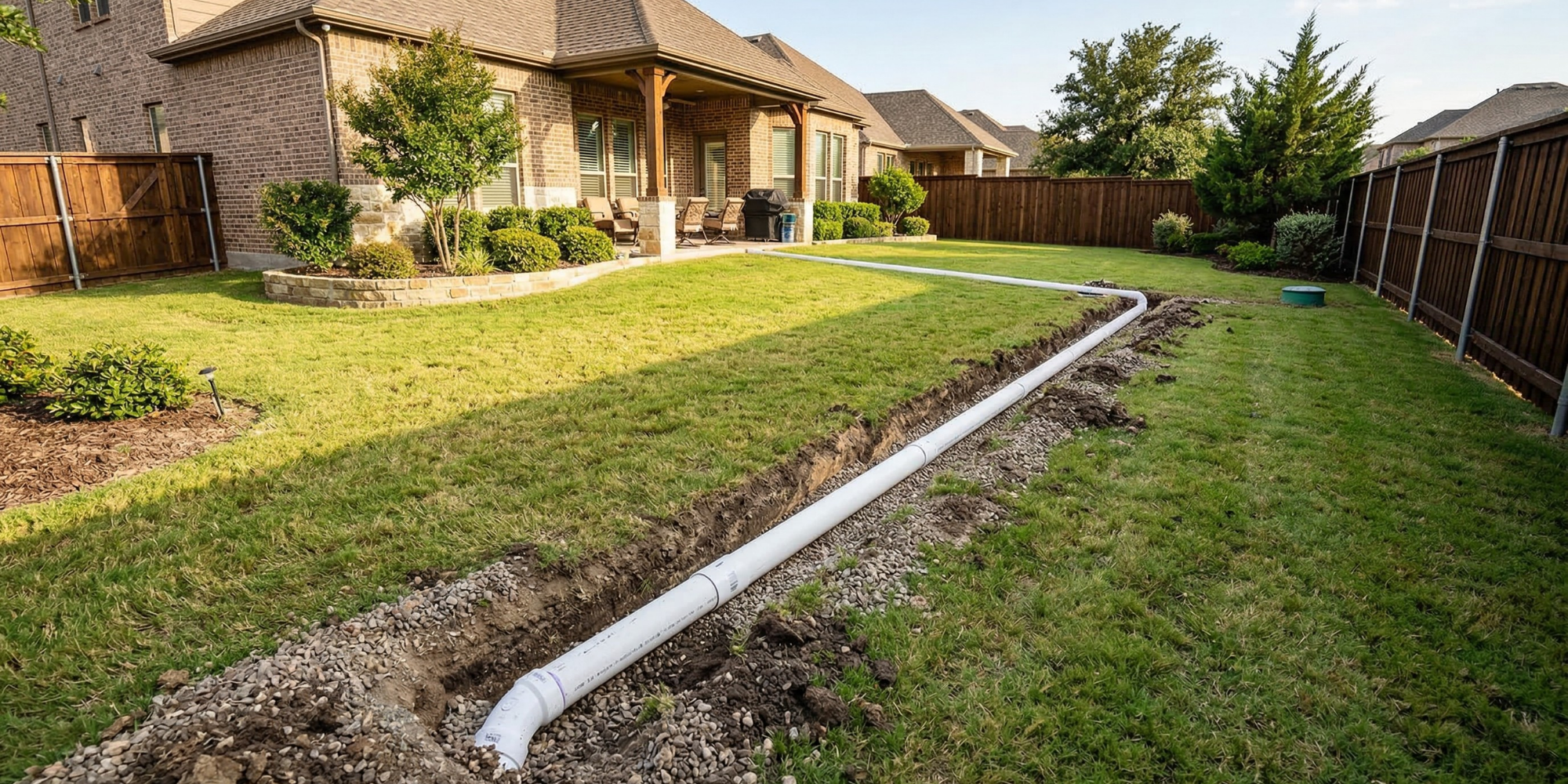
Homeowners across the area face diverse water problems including foundation pooling, saturated lawn areas, erosion along slopes, and moisture intrusion into living spaces. Comprehensive solutions combine surface collection points, subsurface drainage lines, grading modifications, and discharge infrastructure creating effective water management.
Our assessment process documents problem severity, identifies moisture sources, and develops phased implementation plans addressing immediate concerns while preventing future issues. Installation projects coordinate multiple drainage technologies including French drains, surface drains, channel systems, and grading corrections delivering integrated results.
System designs account for landscape preservation, irrigation infrastructure, and property aesthetics maintaining outdoor enjoyment while solving functional problems.
Properties with grade changes experience concentrated water flow that removes soil, undermines hardscape features, and creates unstable slope conditions. Comprehensive erosion solutions combine drainage infrastructure with stabilization techniques preventing soil loss and structural damage. Installation incorporates terracing systems, retaining walls, erosion control fabric, and strategic planting schemes working with drainage components controlling water velocity and volume.
Our designs address both immediate erosion problems and long-term slope stability through engineered solutions appropriate for site-specific conditions. Project execution coordinates drainage installation with structural elements and vegetation establishment creating durable erosion protection.
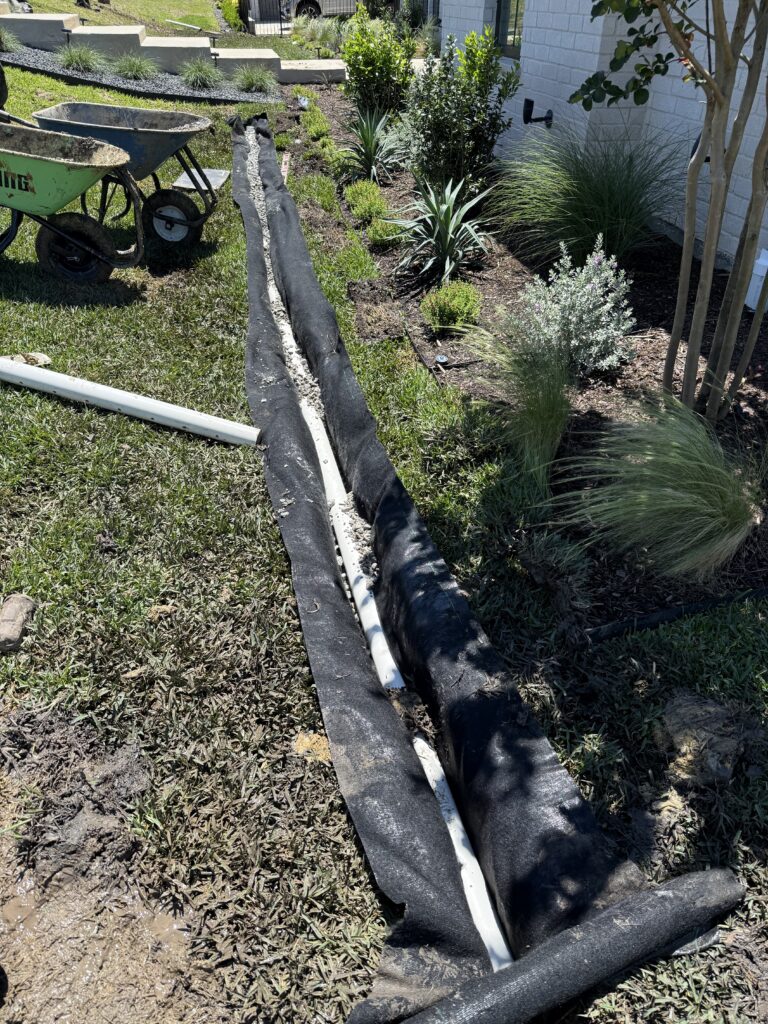
Effective water management utilizes multiple technologies addressing different aspects of property drainage challenges. Comprehensive solutions combine surface and subsurface collection, conveyance infrastructure, and appropriate discharge methods. Our design methodology selects appropriate components based on problem characteristics, site constraints, and budget parameters creating systems delivering reliable performance.
Above-grade water management utilizes catch basins, area drains, channel systems, and swales capturing runoff before accumulation occurs. Component selection depends on flow volume, collection area characteristics, and aesthetic considerations. Surface collection proves most effective for hardscape drainage, roof runoff interception, and areas where water flows across ground level.
Installation positioning follows natural drainage patterns and low point identification ensuring efficient capture. Our designs specify adequate capacity for peak flow events preventing overflow during severe weather. Integration with subsurface discharge infrastructure routes collected water toward appropriate outlets.
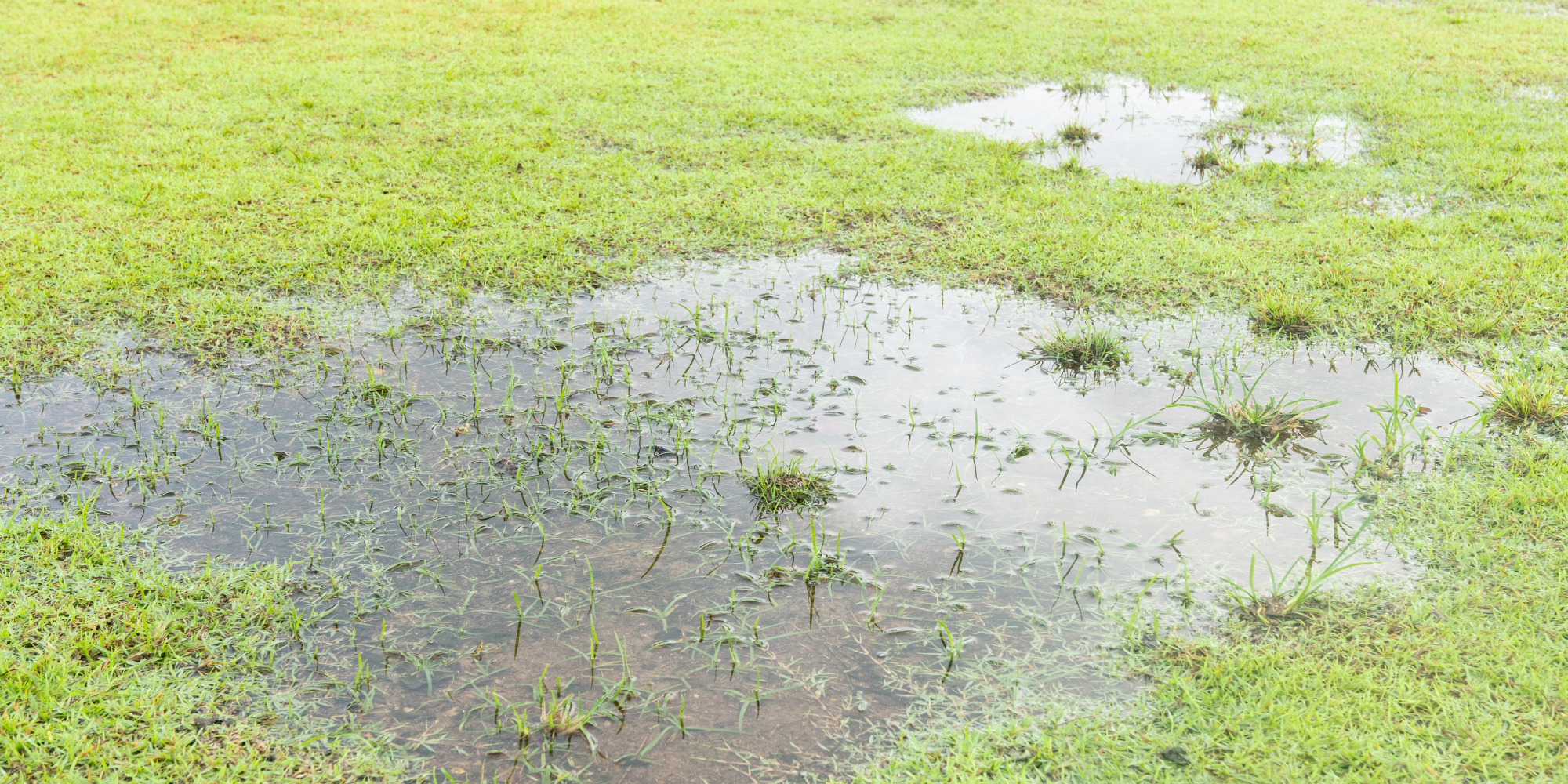
Below-grade systems address soil saturation, high water tables, and moisture that cannot be managed through surface methods alone. French drains, perforated pipe networks, and gravel trenches intercept groundwater before reaching problem areas. These installations prove essential for foundation protection, lawn areas experiencing persistent wetness, and situations where surface drainage proves inadequate.
Design specifications account for soil permeability, water table elevation, and discharge capacity requirements. Our installation procedures incorporate proper filter fabric application, adequate stone volumes, and slope establishment ensuring long-term system function. Connection to surface collection components creates comprehensive drainage addressing both runoff and groundwater.
Successful drainage systems require appropriate termination points accepting collected water without creating secondary problems. Outlet options include surface discharge to vegetated areas, connection to municipal storm systems, and retention structures allowing controlled infiltration. Discharge planning verifies adequate capacity and secures necessary approvals for off-site connections.
Our designs incorporate erosion protection at outlet points, backflow prevention where needed, and maintenance access supporting ongoing system operation. Multiple discharge paths provide redundancy for critical applications preventing catastrophic failures from single-point outlet blockages.
Selecting qualified contractors determines whether water management investments resolve problems permanently or require ongoing interventions. Our company brings comprehensive expertise across multiple drainage technologies, allowing customized solutions addressing unique property challenges. Professional assessment prevents incomplete solutions that address symptoms while ignoring underlying causes. Here are four factors that distinguish our comprehensive approach:
Our capabilities encompass comprehensive irrigation and landscape solutions supporting complete property water management and outdoor enhancement objectives. These services often coordinate with drainage projects to deliver integrated results. Here are the additional offerings available:
Texas Golden Irrigation operates across numerous municipalities in the area, bringing consistent installation quality and drainage expertise to both urban and suburban properties. Our service radius encompasses the following communities:
Property owners experiencing standing water, soil erosion, foundation moisture, or saturated yard areas should invest in professional drainage assessments before problems escalate into expensive structural repairs. Our consultation process includes thorough property evaluation, problem source identification, and detailed proposals outlining recommended solutions with implementation timelines.
Contact Texas Golden Irrigation at (972) 214-5860 to schedule your comprehensive drainage assessment and resolve water management challenges today.
Solution selection depends on water source identification, problem severity, soil characteristics, available discharge options, and budget parameters. Surface drainage addresses runoff flowing across ground level, while subsurface systems resolve groundwater and soil saturation. Many properties benefit from integrated approaches combining multiple drainage technologies addressing different water sources simultaneously.
Project duration varies according to system complexity, property size, and required drainage components. Simple installations involving several surface drains complete within one to three days. Comprehensive projects incorporating extensive French drain networks, multiple collection points, and discharge infrastructure may extend one to two weeks depending on scope and weather conditions.
Installation involves selective excavation that temporarily disturbs affected areas, though careful planning minimizes landscape damage. Trenching routes thread through plantings preserving major specimens while accommodating necessary drainage infrastructure. Most installations complete with restoration work returning properties to pre-construction appearance within several weeks following project completion as disturbed areas revegetate.
Surface drain grates need periodic debris removal preventing blockages, while discharge outlets require inspection ensuring proper water flow. Annual professional service includes system flushing, component inspection, and performance verification. French drain systems with proper filter fabric installation typically function decades with minimal maintenance beyond outlet monitoring and occasional flushing.
Capacity calculations utilize contributing area measurements, runoff coefficients based on surface types, and design storm parameters establishing peak flow rates. Systems must handle anticipated volumes without surcharging during severe weather events. Undersized installations fail during heavy rainfall, while oversized systems waste resources without performance benefits. Professional design ensures adequate capacity balancing reliability against cost considerations.
Project expenses vary significantly based on problem severity, required drainage components, property size, and site accessibility. Simple surface drain installations represent moderate investments, while comprehensive systems incorporating extensive underground infrastructure require substantial budgets. Most residential projects range from moderate to significant investment depending on scope. Professional assessments provide detailed cost projections before work commences.